Introduction
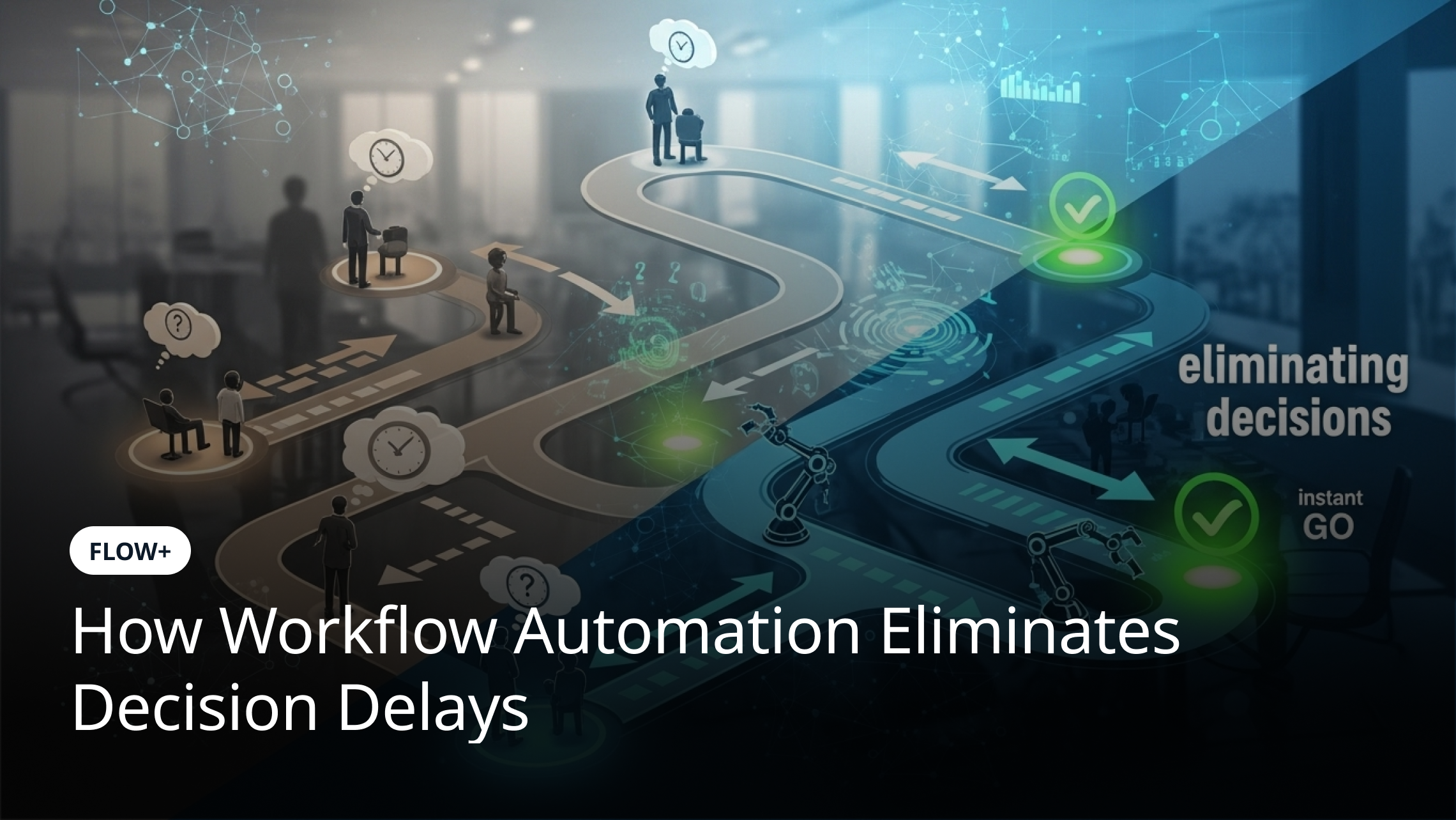
In large organizations, approvals are essential for governance, compliance, and risk management. However, processes such as procurement approvals, vendor onboarding, budget releases, and policy exceptions often involve multiple layers of authorization, creating delays. Employees spend significant time following up through emails, tracking request statuses, and waiting for decisions that should be completed quickly.
As organizations grow, these approval bottlenecks can slow operations, reduce productivity, and impact business agility. Workflow automation platforms like FLOW+ help overcome these challenges by streamlining approval workflows, automating routing and notifications, and providing real-time visibility into request statuses, enabling faster and more efficient decision-making.
Why Approval Bottlenecks Are So Common in Enterprises
Approval bottlenecks are rarely caused by a lack of authority or decision-making capability. Instead, they usually arise from inefficient process structures and a lack of visibility into workflows.
Several common issues contribute to this problem.
- Fragmented Communication Channels
Many approval processes still rely heavily on emails, chat messages, or informal communication. A request may start in a form, move to an email thread and then shift to a messaging platform for clarification. This fragmentation makes it difficult to track the progress of approvals and often leads to missed requests or delayed responses.
- Lack of Process Ownership
In manual systems, it is often unclear who is responsible for the next step in a workflow.
When responsibilities are ambiguous, requests can remain idle simply because no one realizes that an action is required.
- Sequential Approval Structures
Many traditional processes rely on strict sequential approvals, where one decision must be completed before the next reviewer can even see the request. If one approver is unavailable or slow to respond, the entire workflow stalls.
- No Real-Time Visibility
Managers and employees frequently have limited visibility into the status of approval requests. Without a clear view of where a request is stuck, teams must spend time sending reminders or escalating issues manually.
The Real Cost of Decision Delays
Approval bottlenecks may appear to be minor administrative inconveniences, but their impact on enterprise operations can be significant.
- Slower Business Execution
When approvals take too long, operational tasks such as procurement, vendor engagement, or hiring decisions are delayed. These delays directly affect productivity and revenue generating activities.
- Employee Frustration
Employees often spend valuable time chasing approvals rather than focusing on meaningful work. Repeated follow-ups create frustration and reduce morale across teams.
- Increased Operational Risk
Manual approval processes often lack proper audit trails and documentation. This creates governance challenges when organizations need to demonstrate compliance or investigate decision histories.
- Reduced Organizational Agility
In fast-moving markets, companies must respond quickly to opportunities and risks. Slow approval cycles can prevent organizations from acting decisively when timing matters most.
Why Workflow Automation Is the Solution
To overcome approval bottlenecks, enterprises need more than just digital forms or email notifications. They need structured workflow systems that automate decision routing, enforce accountability and provide complete visibility into every stage of the process.
Workflow automation addresses these challenges by transforming approval processes into transparent and rule-driven workflows. Instead of relying on manual coordination, automation ensures that decisions move efficiently through predefined paths.
Key Capabilities of Modern Workflow Automation
A robust workflow automation platform should provide several critical capabilities that eliminate approval delays.
1. Automated Routing
Requests are automatically directed to the appropriate approvers based on predefined rules such as department, transaction value, or request type. This ensures that approvals reach the right decision-makers without manual intervention.
2. Parallel Approvals
Modern workflows allow multiple approvers to review requests simultaneously rather than waiting for sequential approvals. This significantly reduces the overall approval time.
3. Real-Time Status Tracking
Employees and managers can track the progress of approval requests in real time.
This visibility eliminates the need for constant follow-ups and provides clarity about where a request currently stands.
4. Escalation Mechanisms
If an approver does not act within a specified timeframe, the system can automatically escalate the request to a higher authority or send reminders.
This prevents requests from getting stuck indefinitely.
5. Complete Audit Trails
Every step in the workflow is recorded, including:
These records provide transparency and support compliance and internal audits.
How FLOW+ Eliminates Approval Bottlenecks
FLOW+ is designed to streamline enterprise workflows by introducing structured automation into approval processes. Instead of relying on fragmented communication and manual coordination, FLOW+ ensures that every approval follows a clearly defined and trackable path.
Intelligent Workflow Design
Organizations can configure workflows that reflect their real-world approval structures. Decision rules can be based on factors such as request value, department hierarchy, or risk level. This flexibility ensures that workflows remain both efficient and compliant with internal policies.
Transparent Approval Tracking
FLOW+ provides real-time dashboards that allow employees and managers to see exactly where a request is within the workflow.
This transparency eliminates uncertainty and improves accountability.
Automated Escalations and Notifications
Approvers receive timely notifications when actions are required. If requests remain pending beyond defined timelines, the system automatically escalates them.
This prevents delays caused by overlooked approvals.
Integration With Enterprise Systems
FLOW+ can integrate with ERP, HRMS, CRM and document management platforms, ensuring that workflow data flows seamlessly across the organization.
This integration reduces manual data entry and improves operational efficiency.
Transforming Approvals Into Efficient Business Processes
When approval workflows are automated and structured, organizations experience a significant improvement in operational efficiency.
Key benefits include:
Workflow automation does not eliminate governance it strengthens it by ensuring that decisions are made within transparent and controlled processes.
Conclusion
Approval bottlenecks are one of the most common and frustrating challenges in enterprise operations. When decisions depend on manual coordination, email follow-ups and unclear responsibilities, even simple approvals can take days or weeks to complete. As organizations scale, these inefficiencies multiply and begin to impact productivity, employee satisfaction and business performance.
Workflow automation provides a structured solution by introducing transparency, accountability and efficiency into approval processes. With platforms like FLOW+, enterprises can transform slow and fragmented approval systems into streamlined workflows where decisions move quickly, responsibilities are clear and every action is fully traceable.
In modern organizations, speed and governance must go hand-in-hand and intelligent workflow automation makes that possible.