Introduction
Organizations pursuing ISO certification must maintain accurate documentation controlled records and standardized processes to demonstrate compliance with international quality and management standards. However managing large volumes of paper documents often leads to version inconsistencies delayed document retrieval storage challenges and increased audit preparation efforts. Document digitization services help organizations transform physical records into secure searchable digital assets that simplify compliance management and improve operational efficiency.
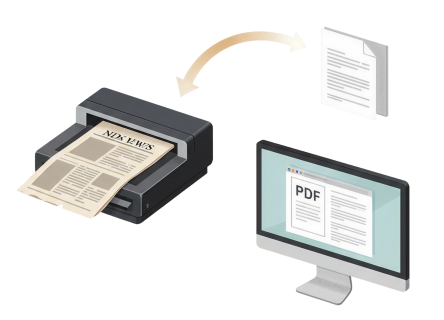
Document digitization is more than converting paper into digital files. It creates a structured information ecosystem where documents can be securely stored easily retrieved and efficiently managed throughout their lifecycle. Digi+ enables organizations to digitize business records that can be centrally managed through DMS+ while Flow+ automates document approvals reviews and compliance workflows helping organizations maintain consistent quality management practices.
Understanding ISO Compliance and Quality Management Systems
International Organization for Standardization (ISO) standards provide globally recognized frameworks that help organizations improve quality information security environmental responsibility occupational safety and operational consistency.
Many ISO standards require organizations to maintain documented information that demonstrates compliance with defined policies procedures and operational controls.
Common standards include:
Regardless of the standard organizations must effectively manage documents throughout their lifecycle while ensuring information remains accurate accessible and protected.
Why Paper-Based Documentation Creates Compliance Challenges
Many organizations still depend on physical records for procedures manuals inspection reports audit documents employee records and compliance documentation. As documentation grows maintaining consistency becomes increasingly difficult.
Limited Document Control
Paper documents are difficult to track once multiple printed copies exist across departments. Employees may unknowingly use outdated procedures creating inconsistencies that can affect compliance.
Time-Consuming Audit Preparation
Preparing for internal or external audits often requires locating documents from multiple departments storage locations or archived files.
Manual document retrieval increases preparation time and places additional pressure on compliance teams.
Version Inconsistencies
Without centralized document management organizations struggle to ensure employees always reference the latest approved version of procedures policies and work instructions.
Outdated documentation may lead to non-conformities during audits.
Storage and Retention Challenges
ISO standards often require organizations to retain records for several years.
Managing physical archives consumes office space increases storage costs and makes long-term record preservation more difficult.
Limited Traceability
Paper records make it difficult to determine:
This lack of visibility affects governance and audit readiness.
How Document Digitization Strengthens ISO Compliance
Digitization creates a structured digital environment where compliance documentation becomes easier to manage search and control.
Centralized Document Repository
Digitized records stored through DMS+ provide a single source of truth for policies procedures manuals work instructions inspection reports and compliance records.
Employees always access the latest approved documentation reducing the risk of outdated information.
Improved Document Accessibility
Searchable digital documents allow employees auditors and compliance teams to retrieve information within seconds using keywords metadata or document categories.
Faster access significantly improves audit preparation and day-to-day operations.
Better Version Control
Digitized documents integrated with DMS+ maintain version history ensuring previous versions remain archived while employees access only approved documents.
This helps organizations demonstrate proper document control during ISO audits.
Enhanced Record Retention
Organizations can define document retention policies based on regulatory and ISO requirements ensuring records remain securely stored for the required duration.
Automated retention reduces the risk of accidental deletion or premature disposal.
Improved Information Security
Sensitive compliance documentation can be protected through:
These capabilities strengthen compliance particularly for standards such as ISO 27001.
Supporting Quality Management Throughout the Document Lifecycle
Quality management systems depend on controlled documentation from document creation through archival.
Digitization supports every stage of the document lifecycle.
1. Document Capture
Digi+ converts paper-based records including quality manuals inspection reports calibration certificates production records supplier documentation and training records into searchable digital documents.
2. Document Management
Once digitized documents are centrally managed using DMS+ allowing organizations to classify organize retrieve and secure compliance information efficiently.
3. Workflow Automation
Compliance processes frequently require multiple reviews and approvals.
Flow+ automates:
Automation reduces manual follow-ups while improving consistency across departments.
Best Practices for Digitizing ISO Compliance Documents
Organizations should adopt a structured approach when modernizing compliance documentation.
Identify Critical Compliance Records First
Prioritize digitization of:
Digitizing high-value records first delivers immediate operational and compliance benefits.
Standardize Metadata and Classification
Define consistent metadata fields such as:
Standardized indexing improves searchability and strengthens governance across the organization.
Establish Document Review Processes
Digitization should be supported by automated workflows that ensure documents are reviewed approved and updated according to organizational quality policies.
Using Flow+ helps maintain document consistency while reducing administrative effort.
Integrating ISO Documentation with Enterprise Business Processes
ISO compliance becomes more effective when documents are connected with everyday business operations instead of being stored in isolated repositories.
Organizations can integrate digitized compliance documents into processes such as:
By combining Digi+ with Flow+ organizations can automate document routing review cycles approval workflows and compliance notifications. Forms+ enables organizations to capture inspection reports audit observations and compliance checklists digitally eliminating paper-based documentation at the source.
Benefits of Document Digitization for ISO Compliance
Document digitization delivers measurable benefits that extend beyond certification and support continuous quality improvement.
1. Faster Audit Readiness
Digitized records allow organizations to retrieve compliance documents within seconds reducing the time and effort required to prepare for internal and external audits.
Audit teams can quickly access policies procedures inspection reports and supporting evidence from a centralized repository.
2. Improved Document Control
Centralized document management ensures employees always work with the latest approved documents while maintaining complete version history for audit purposes.
This minimizes the risk of outdated procedures being used across departments.
3. Enhanced Compliance Monitoring
Digitized documents supported by automated workflows make it easier to monitor document reviews approvals and periodic updates ensuring compliance activities remain on schedule.
4. Increased Operational Efficiency
Employees spend less time searching for records managing paper files and handling manual approvals allowing them to focus on higher-value activities.
5. Reduced Storage Costs
Replacing physical archives with secure digital repositories reduces storage expenses printing costs and administrative overhead while improving information accessibility.
6. Better Business Continuity
Digital records protected through secure backups and disaster recovery strategies remain available even during unexpected disruptions helping organizations maintain compliance and operational continuity.
Common Mistakes to Avoid During ISO Document Digitization
A successful digitization initiative requires careful planning and governance.
Digitizing Without a Classification Strategy
Scanning documents without standardized metadata or folder structures makes information difficult to locate and reduces the value of digitization.
Organizations should establish consistent classification standards before beginning the project.
Ignoring Version Control
Simply storing scanned files without version management can result in multiple conflicting document copies.
Version control should be implemented to ensure employees always reference approved documentation.
Delaying Workflow Automation
Many organizations digitize documents but continue using manual approval processes.
Integrating Flow+ automates reviews approvals and document routing improving both efficiency and compliance.
Neglecting Security Controls
Compliance documents often contain confidential operational and employee information.
Organizations should implement role-based access encryption audit trails and secure backups to protect sensitive records.
Real-World Examples
Manufacturing
A manufacturing company digitizes quality manuals inspection reports calibration certificates and production records using Digi+. Documents are centrally managed through DMS+ while Flow+ automates engineering change requests corrective actions and document approvals helping maintain ISO 9001 compliance.
Healthcare
A healthcare provider digitizes clinical procedures training records equipment maintenance logs and audit documentation. Digital records improve accessibility strengthen document control and simplify compliance with healthcare quality standards through centralized management in DMS+.
Food and Beverage
A food manufacturing organization digitizes supplier certifications HACCP documentation quality inspection reports and food safety records. Automated approval workflows ensure compliance documentation remains current while reducing manual administrative work.
Engineering and Infrastructure
An engineering company digitizes project documentation technical drawings safety procedures and inspection reports. Teams retrieve approved documents instantly through DMS+ while Flow+ automates design reviews compliance approvals and revision management supporting ISO 9001 and ISO 45001 initiatives.
Why ISO Compliance Starts with Well-Managed Information
Successful quality management systems depend on reliable accurate and easily accessible information. As organizations continue expanding their operations managing paper-based compliance records becomes increasingly complex.
Document digitization creates a strong foundation for consistent document control improved governance faster audits and standardized business processes. When combined with centralized document management and workflow automation organizations can maintain compliance while continuously improving operational performance.
Conclusion
Achieving and maintaining ISO compliance requires more than documented procedures. Organizations need a structured approach to managing policies quality records inspection reports and compliance documentation throughout their lifecycle. Document digitization simplifies this process by transforming paper-based records into secure searchable and centrally managed digital assets that improve document control strengthen audit readiness and support continuous quality improvement.
Digi+ provides the foundation for modern compliance management by digitizing critical business documents. When integrated with DMS+ for centralized document management Flow+ for workflow automation Forms+ for digital compliance data capture and AccountsPayable+ for finance-related documentation organizations can build a connected quality management ecosystem that supports regulatory compliance operational excellence and long-term business growth.